


Lights, Camera, Fashion: The Evolution of Film Wardrobe
- Grace Bowland

- Apr 11, 2023
- 5 min read
Updated: Apr 17, 2023
Wardrobe is the silent actor of film. It's not just about dressing actors stylishly; it's a tool used by filmmakers to convey emotions, establish time periods, create a visual language, and ultimately bring characters to life in a way that enhances the overall cinematic experience. From the early years of silent films to the modern-day blockbusters, wardrobe has been an essential component of filmmaking. It has shaped the visual language of cinema, reflected cultural and societal norms, and made a lasting impact on fashion and popular culture. The rich history of film wardrobe exposes the craftsmanship, creativity, and artistry involved in creating costumes for characters on-screen. It offers a fascinating glimpse into how fashion and film have influenced and inspired each other, resulting in iconic looks that continue to captivate audiences.
In the early years of cinema, wardrobe options were incredibly limited. The technology of the time— black-and-white silent films and flickering moving pictures— offered little room for intricate costume details or vibrant colors. On top of that, budgets were tight, and filmmakers had to be resourceful with wardrobe choices. Costumes were often created in-house, using basic materials and limited resources, which meant that the wardrobe options were often modest and practical rather than extravagant or fashionable. Besides, the idea of costume design being a specialized profession was still in its infancy. Unlike today, where costume designers are integral members of a film's production team, in the early years of cinema, there was limited recognition of the artistic and creative role of costume design. Despite these limitations, early filmmakers were still able to use wardrobe creatively to convey character traits and establish the setting and time period of a story. The costumes were often designed to serve the specific needs of the story, with a focus on functionality and storytelling rather than high fashion.
The New York Hat is a silent film released in 1912, starring Mary Pickford, one of the most iconic actors of early cinema. In terms of wardrobe, Pickford's costume, specifically her hat, holds special significance in the film. In the film, Pickford plays Mollie, a small-town girl living in a conservative town. When Mollie receives a gift of a stylish hat from a man in New York, it becomes the talk of the town, and Mollie's life takes an unexpected turn. The hat symbolizes Mollie's transformation from a modest, conservative girl to a more modern and independent woman. It serves as a visual representation of Mollie's growing confidence and self-expression, as she dares to be different and break free from the confines of her small-town life. The film's costume design, including the notable hat, played a crucial role in conveying the character's personality and the film's overall story. The New York Hat and Mary Pickford's wardrobe are seen as significant contributions to early cinema, showcasing the power of costumes in conveying character traits, emotions, and storytelling.
The rise of the studio system during the Golden Age of Hollywood was a groundbreaking moment in the history of wardrobe design in film. Costume designers, once overlooked and undervalued, now took center stage as key players in film production. They brought more creativity, skill, and vision to the industry, transforming the way characters were brought to life on screen. Gone were the days of makeshift costumes cobbled together from existing wardrobes. Costume designers were tasked with creating original and visually stunning ensembles that would captivate audiences and enhance the characters' personalities. They meticulously considered every detail, from the characters' motivations and story arcs to the film's setting, time period, and tone, to craft costumes that were not just garments, but extensions of the characters' identities.
The iconic wardrobes of Marilyn Monroe, Audrey Hepburn, and Grace Kelly have left an unforgettable mark on the fashion industry and popular culture. Their impeccable style, characterized by minimalist elegance, sultry glamour, and refined sophistication, continues to influence contemporary fashion. From Marilyn Monroe's provocative and feminine looks to Audrey Hepburn's chic and timeless ensembles, and Grace Kelly's regal poise and understated elegance, these leading ladies set new standards of fashion and style that are still celebrated.
Behind these iconic wardrobes were legendary costume designers such as Edith Head (pictured below) and Adrian, whose creative vision and technical expertise shaped the fashion landscape of their time. Edith Head, known as the queen of Hollywood costume design, earned eight Academy Awards for her remarkable work in crafting unforgettable looks for stars like Audrey Hepburn, Elizabeth Taylor, and Grace Kelly. Adrian, with his avant-garde designs and innovative use of color, pushed the boundaries of fashion and created iconic costumes for stars like Greta Garbo and Joan Crawford.
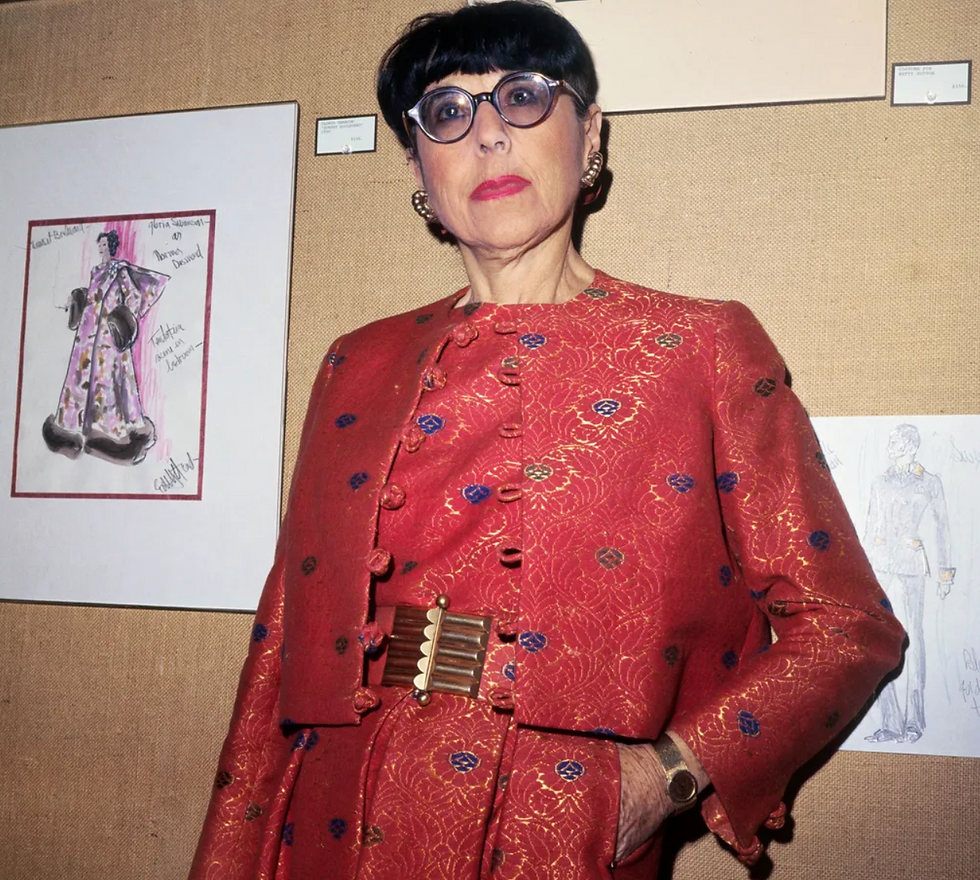
The influence of these visionary costume designers on the ever-evolving landscape of fashion and pop culture is immeasurable, transcending words or accolades. The iconic looks they crafted became synonymous with the characters and films themselves, adding a visual identity that resonated with audiences and contributed to the commercial success of the films. These designer's collaboration with Hollywood stars helped shape the concept of wardrobe styling, influencing generations of fashion enthusiasts and setting new standards of style. The enduring influence of these creative geniuses continues to captivate audiences, but their influence went far beyond the screen. Their creations became cultural touchstones, influencing fashion trends and popular culture.
Costumes worn by iconic characters on the big screen have often served as a wellspring of inspiration for fashion designers as well as fashion-forward individuals.
This influence can be seen in the replication, reinterpretation, and referencing of costumes from block-buster films in various fashion arenas. Whether it's a red carpet event where celebrities pay homage to a beloved star's iconic look (by ruining a historic garment), a fashion collection that draws inspiration from a film's costumes, or everyday fashion choices that are influenced by on-screen style, the impact is undeniable. Pola Negri, a popular actress of the 1920s, dyed white satin shoes to match her outfits. Soon, women by the thousands followed her lead. Clara Bow, another silent screen star, helped to popularize bobbed hair, sailor pants, and pleated skirts— fashion staples of the time. The allure of film wardrobe has seeped into the collective consciousness of fashion enthusiasts, and shaped the way we view and engage with fashion. As the lines between film, fashion, and popular culture blur, the influence of film wardrobe on fashion trends is likely to continue to be a source of creative inspiration and cultural significance in the coming years.

Today, with an increased focus on inclusivity and representation, films have started to challenge traditional norms and push boundaries through their wardrobe choices. Costume designers have played a pivotal role in this evolution, using their talents to create authentic and diverse looks that accurately represent the characters and stories being told. From showcasing different ethnicities and cultures to breaking gender stereotypes and promoting body positivity, film wardrobe has become a visual medium to tell stories that are more inclusive and reflective of the real world. In the Academy Award-winning film Moonlight, costume designer Caroline Eselin crafted wardrobe choices that reflected the characters' complex identities and experiences as Black, queer men. The costumes captured the nuances of the characters' lives, from childhood to adulthood, and were praised for their authenticity and attention to detail. The wardrobe choices in Moonlight not only elevated the film's visual storytelling but also contributed to its cultural significance as a groundbreaking work of LGBTQ+ cinema.

Masterpieces rely on detailed and thoughtful wardrobes to enhance storytelling, character development, and visual aesthetics. Film wardrobe evolved from basic and practical to an essential component of filmmaking. Legendary costume designers like Edith Head and Adrian proved the importance of their work by crafting looks that transcended time, leaving a lasting legacy in the world of fashion and film. Wardrobe design is one of the most powerful tools a filmmaker can use to create powerful and thought-provoking works of art.


Comments